Butterflies in the news

Britain’s butterflies made the BBC news this morning…

These reports draw on data from the UK Butterfly Monitoring Scheme (UKBMS), one of the largest and longest‑running citizen science programmes in the world. Since its launch in 1976, the scheme has collected more than 44 million butterfly records through 782,000 surveys carried out by volunteers across the UK.

Of the 59 native butterfly species monitored, long‑term trends show that 33 species have declined, 25 have increased, and one mountain species cannot be assessed due to insufficient data.

Experts attribute many of the declines to habitat loss, pollution and climate change, with the greatest impacts seen among rarer and more specialised species. In contrast, butterflies that can thrive in a wide range of habitats — including farmland, parks and gardens — are generally faring better and, in some cases, increasing in number.

You can read more about it here.

One species that will be flying soon is the Orange Tip Butterfly.  Only males have the bright orange wing tips. Females lay eggs on specific caterpillar food plants, mainly on Cuckooflower and Garlic Mustard, and this species is thriving, up by 42% since 1976.  Both species are flowering at the moment.  Garlic Mustard grows in shady spots in woodlands and hedgerows whilst Cuckooflower prefers damp meadows.

Garlic Mustard in Tysoe

Header photo credit: Illuvis, Pixabay

The RSPB’s latest advice on what and when to feed garden birds:

The RSPB’s latest advice on what and when to feed garden birds:

Feed seasonally. Feed safely.

Some species of garden bird, such as Greenfinches, are experiencing serious declines because of a disease called trichomonosis. This is a highly contagious disease and can spread where birds gather in large numbers such as at bird feeders.  Numbers of Greenfinches, for example, have dropped by over 65% in the last three decades. 

We can all help stop the spread of disease among garden birds by making two simple changes in how we feed birds.

Feed seasonally

During summer and autumn, there’s a higher risk of disease spreading. But it’s also when there are more natural foods available to birds, such as seeds and insects.  From 1 May to 31 October, stop filling your bird feeders with seeds or peanuts.  You can continue to offer garden birds small amounts of mealworms, fatballs or suet.  From 1 November to 30 April you can feed your birds a full range of bird foods, including seeds and peanuts.

Feed safely

  • Clean your bird feeders and water baths at least once a week. 
  • Place your bird feeders in a different spot every week. 
  • Avoid putting feeders under places where birds roost, such as under trees. 
  • Don’t use bird feeders with flat surfaces, such as bird tables, window feeders and feeders with trays. 
  • Feed in moderation. 
  • Keep food as dry as possible.
  • Change water in bird baths daily. 
  • Help birds find their own food. 

Find out more from the RSPB website

White Flowering Hedges in Spring 

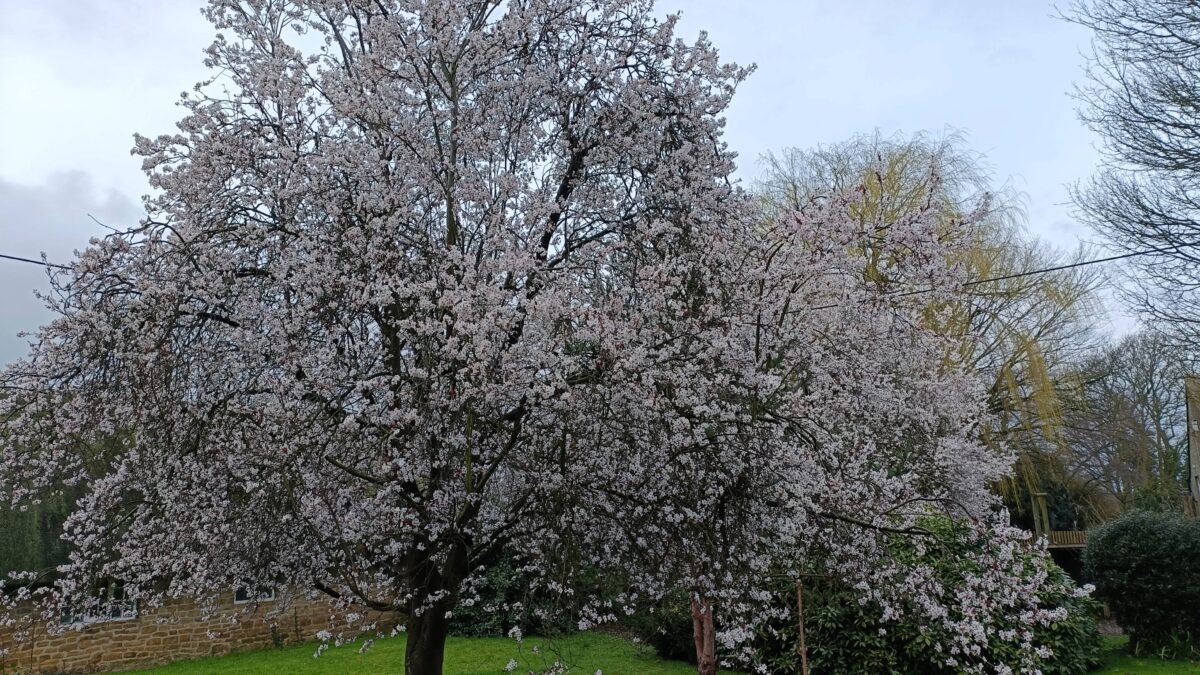
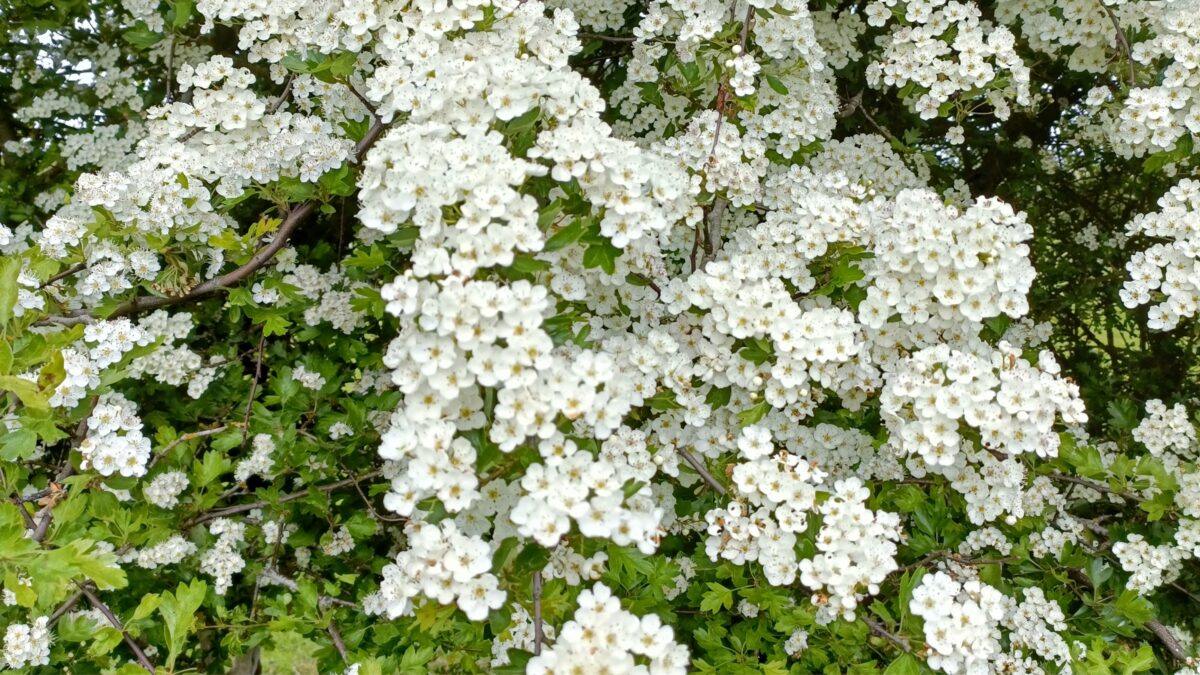
From February onwards there is a succession of white-flowering hedges and trees in Warwickshire. The key species are Cherry Plum (Prunus cerasifera), Blackthorn (Prunus spinosa) and Hawthorn (Crataegus monogyna). Cherry plum tends to grow without thorns, have hairless twigs, flower earliest and at the same time as the foliage emerges, whilst Blackthorn flowers appear a bit later, and before the foliage. Hawthorn flowers last, and after the foliage has appeared. 

When the photographs below were taken (11th March 2026), almost all of the white hedgerow blossom was Cherry Plum (Prunus cerasifera). Virtually no Blackthorn (Prunus spinosa) had started to flower. The two species are very similar, but a few key features distinguish them, and these are illustrated below. 

Typical stages of Cherry Plum, Blackthorn and Hawthorn in Warwickshire on 11th March 2026 
Differences between flowers and stems of Cherry Plum and Blackthorn. 

All three species are important components of the ‘blossom sequence’, described by Warwickshire’s Steven Falk and others. According to Steven, although a simple blossom sequence might just entail Blackthorn and Hawthorn, if further blossoming species are added to a hedge network, this can provide a longer and more continuous source of pollen and nectar for a variety of insects, including honey bees. Additional species could include Cherry Plum, Goat Willow and Common Gorse (which peak before Blackthorn), Field Maple and Crab Apple (which peak between Blackthorn and Hawthorn), and Guelder Rose, Dogwood and Elder (which peak after Hawthorn). 

It is important to manage hedges in a way that allows at least a proportion of them to flower each year. Cutting once every two, or preferably three, years increases flower and berry abundance, as flowers and berries are often only produced on two-year and older stems. There is plenty of guidance available on managing hedgerows for wildlife

If you’re interested in the flowering times of key species such as Blackthorn, and the timing of other wildlife activities then you may wish to visit Nature’s Calendar

Images and information provided by Di Napier. 

River Stour Blessing Ceremony

On Saturday 14th March, the Stourvale Action for the Environment group (SAFE) held an event to celebrate the 29th International Day of Action for Rivers Join us for the 29th International Day of Action for Rivers on March 14, 2026 – International Rivers.  This included a River Blessing Ceremony by local Druid, Martin Russell, and displays and activities to demonstrate:

Music was provided by ‘Misspent Ukes’, the local U3A ukulele band.

The event was blessed with sunshine and was well-attended.  The ‘find’ of the day was a Brook Lamprey, a primitive fish which is quite scarce in rivers these days and is a protected species.

This was one of a series of events that were part of the River Hope ‘Gathering’ The Gathering – River Hope.

Wellesbourne and Walton Parish Council public consultation event

On Friday and Saturday, 27th and 28th February 2026, Wellesbourne and Walton Parish Council held a public consultation event on their developing Local Nature and Climate Action plan.  There is a parallel consultation online.  The aim is to have a final version ready in late spring, from which prioritised Actions and Projects can be detailed, drawn up and executed. Details can be accessed via the Parish Council website https://www.wellesbourneandwalton-pc.gov.uk/.

Residents and councillors have already been working together to address the Climate and Nature Emergency and support the Climate Emergency Statement made by the Parish Council in 2022. You can read about activities to support wildlife in Wellesbourne here: https://swanforwildlife.org/groups/sustainable-wellesbourne/.

There is information about how to develop a Local Nature Action Plan here: https://swanforwildlife.org/initiatives/local-nature-action-plans/

Evenlode Landscape Recovery Project begins work on the ground

The Evenlode Landscape Recovery Project is ready to move from planning to delivery. 

This project is the first to be led by a farmer cluster. 

Managed by The North East Cotswold Farmer Cluster CIC (NECFC), the project comprises over 50 land managers and farmers, including tenant farmers. 

Together, they will start work on the ground across the 3,000-hectare project area. 

The wider catchment includes some of county’s finest landscapes. It spans parts of the Cotswolds National Landscape, the remnants of the ancient Royal Hunting Forest of Wychwood, and the Blenheim Palace World Heritage Site. It includes 16 river water bodies, including the River Evenlode and its major tributaries, the Glyme and the Dorn. 

Like so many parts of the country, the landscape is under increasing pressure from flooding, water quality decline, biodiversity loss and the challenge of sustaining long-term, productive food systems. 

For example, around 19% of the area lies within a flood zone and floods frequently during heavy rainfall due to the catchment’s rapid (“flashy”) response. This puts multiple communities, farmland, rail and local roads at risk.

One of the farmers taking part in the project reported one field flooding nine times in the winter of 2023–24. 

The catchment supports a mosaic of habitats, including oak and ash woodland, limestone grasslands, lowland meadows and fen, creating conditions for a wide range of wildlife. 

The priority species identified for targeted conservation action because they are rare, declining or threatened, include remnant populations of the endangered native crayfish and water voles, alongside rare plants such as fen violet and downy woundwort. 

Once common along rivers and streams, water voles have declined sharply in recent decades due to habitat loss and the predatory American Mink.They are found along rivers, streams and ditches and can be mistaken for brown rats. Water voles are legally protected in the UK under the Wildlife and Countryside Act 1981, are a Priority Species under the UK Post-2010 Biodiversity Framework and are listed as endangered on both the Great Britain and England Red Lists for mammals.

Community orchard pruning day at Cornmill Meadows, Shipston-on Stour

A dry February 2026 morning and a dozen volunteers turned up at Cornmill Meadows, Shipston’s wildlife site, to lightly prune and cut out suckers in the community orchard planted 2 years ago.

A mixture of heritage trees were planted including plums, gages, apples, pears and damsons, 54 in total. We hope to harvest some fruit this year for the first time.

The Ragwort Debate

Ragwort and wildlife

Common ragwort (Jacobaea vulgaris) is a native plant of the British Isles and plays an important role in supporting wildlife. According to the National Trust, ragwort is one of the most frequently visited flowers by butterflies, including Red Admiral and Peacock butterflies.

It provides food for around 178 species of insects, with 27 species relying on ragwort alone. Its bright yellow flowers also attract approximately 40 species of night-flying moths. These insects, in turn, support wider ecosystems by providing food for birds, bats, mice, voles and predatory insects. Ragwort flowers for longer than many other wild plants, offering a sustained source of nectar and pollen later into the season. It is also the sole food plant of the striking black-and-yellow caterpillars of the Cinnabar Moth.

Ragwort and Livestock Safety

Despite its ecological value, common ragwort is classified as a specified weed under the Weeds Act 1959. The plant contains toxins that can cause serious illness or death if eaten by horses and other grazing animals, particularly when ragwort is present in hay or silage.

To address this risk, Defra has produced a Code of Practice on How to Prevent the Spread of Ragwort. The Code promotes good land management to significantly reduce the likelihood of livestock poisoning. It is intended for all landowners and occupiers and provides practical guidance on:

  • Identifying common ragwort
  • Assessing risk and setting priorities for control
  • Choosing appropriate and effective control methods
  • Environmental considerations
  • Health and safety responsibilities

Importantly, the Code does not seek to eradicate ragwort altogether. Instead, it supports a strategic and proportionate approach, controlling ragwort only where it poses a genuine threat to the health and welfare of animals, while recognising its value to wildlife.

Header image credit: Cultureel Gelderland, CC0, via Wikimedia Commons


Resources & Guides for Ragwort

Nature security assessment on global biodiversity loss, ecosystem collapse and national security

This new strategic assessment from Defra explores how global biodiversity loss and the collapse of critical ecosystems could affect the UK’s resilience, security and prosperity.

https://www.gov.uk/government/publications/nature-security-assessment-on-global-biodiversity-loss-ecosystem-collapse-and-national-security.

This assessment is an analysis of how global biodiversity loss and ecosystem collapse could affect UK national security.

It shows how environmental degradation can disrupt food, water, health and supply chains, and trigger wider geopolitical instability. It identifies 6 ecosystems of strategic importance for the UK and explores how their decline could drive cascading global impacts.

This assessment, which was developed by analysts and experts across HM Government, supports long-term resilience planning. Publishing the assessment highlights opportunities for innovation, green finance and global partnerships that can drive growth while safeguarding the ecosystems that underpin our collective security and prosperity.

Announcing “The Gathering: for water and Nature”

The River Hope team are organising events around Stratford-on-Avon District and South Warwickshire between 6 – 15 March, 2026, to see water differently – as a living presence that connects people, place and Nature.

The programme was launched on 1 December, 2025 at the Crowne Plaza Hotel in Stratford-upon-Avon: see presentation outlining the overarching vision (Remember | Reflect | Restore).

They are co-creating an opportunity for people across South Warwickshire to come together for learning, creative exploration and imagining, reflection, planning and action to mark the International Day of Action for Rivers on Saturday 14 March, 2026.

Expect: workshops, discussion panels, book talks, film screenings, exhibitions, ceremonies and hands-on activities that bring together residents, creatives, environmentalists, schools, local organisations, community groups and elected representatives.