
Bluebells

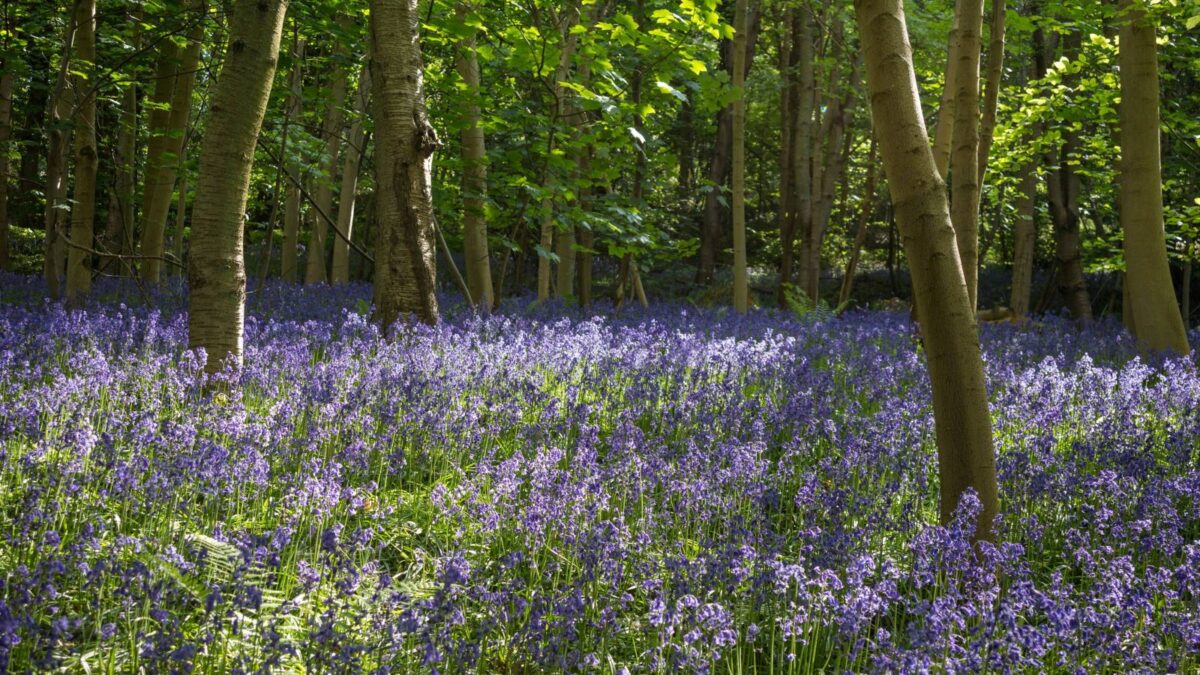
Bluebells are now in bloom across Warwickshire, creating some spectacular spring displays. They are most often found in ancient and long‑established woodlands, as well as in hedgerows and roadside verges close to these habitats.
The native British bluebell (Hyacinthoides non‑scripta) occurs naturally from northwest Spain to the Netherlands, but around half of the global population is found in the UK. Despite its abundance here, the species faces a number of pressures, including the loss of suitable habitat and hybridisation with non‑native relatives.
Hybridisation with the so‑called Spanish bluebell (Hyacinthoides hispanica) has been a particular concern for many years. This non‑native species was introduced as a garden plant, possibly between the late 1600s and 1700s, and in fact originated in Portugal rather than Spain. It readily interbreeds with native bluebells, producing hybrids (Hyacinthoides × massartiana) that are now widespread in gardens and parks across the country.
Although hybrids are common, current research shows little evidence of widespread genetic dilution in wild populations. Only around 2% of native bluebell populations in natural habitats show signs of hybridisation. In addition, native British bluebells may be more fertile than their hybrid counterparts, suggesting they continue to hold a competitive advantage in the right conditions.