
White Flowering Hedges in Spring

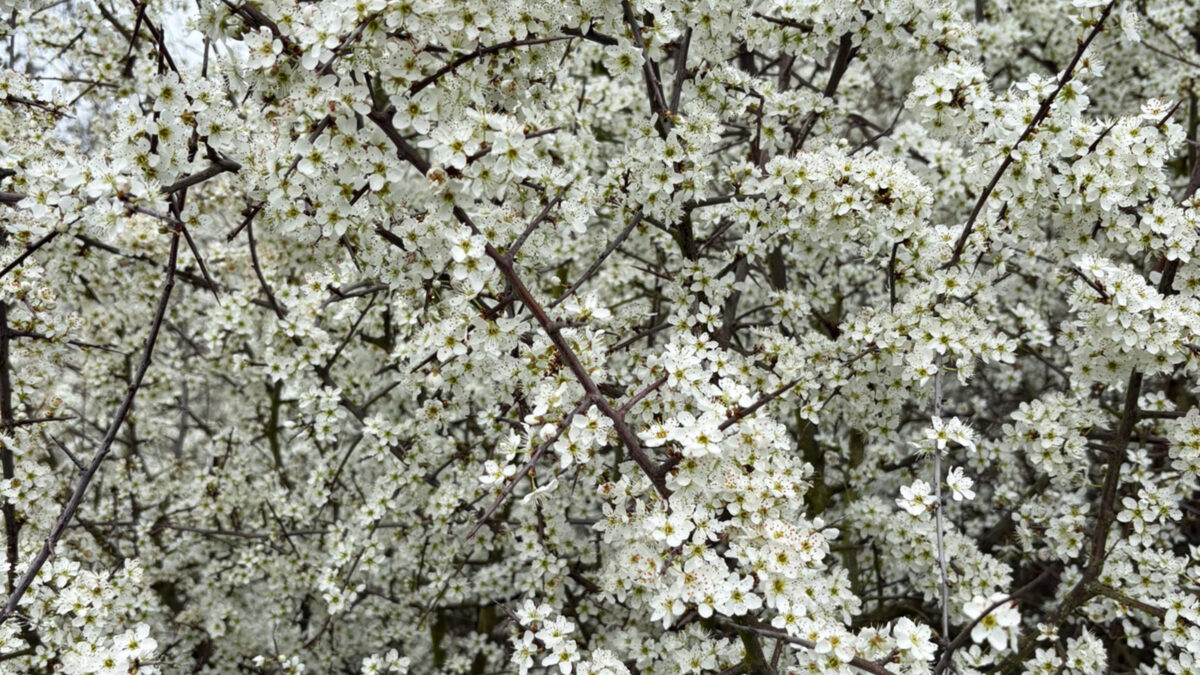
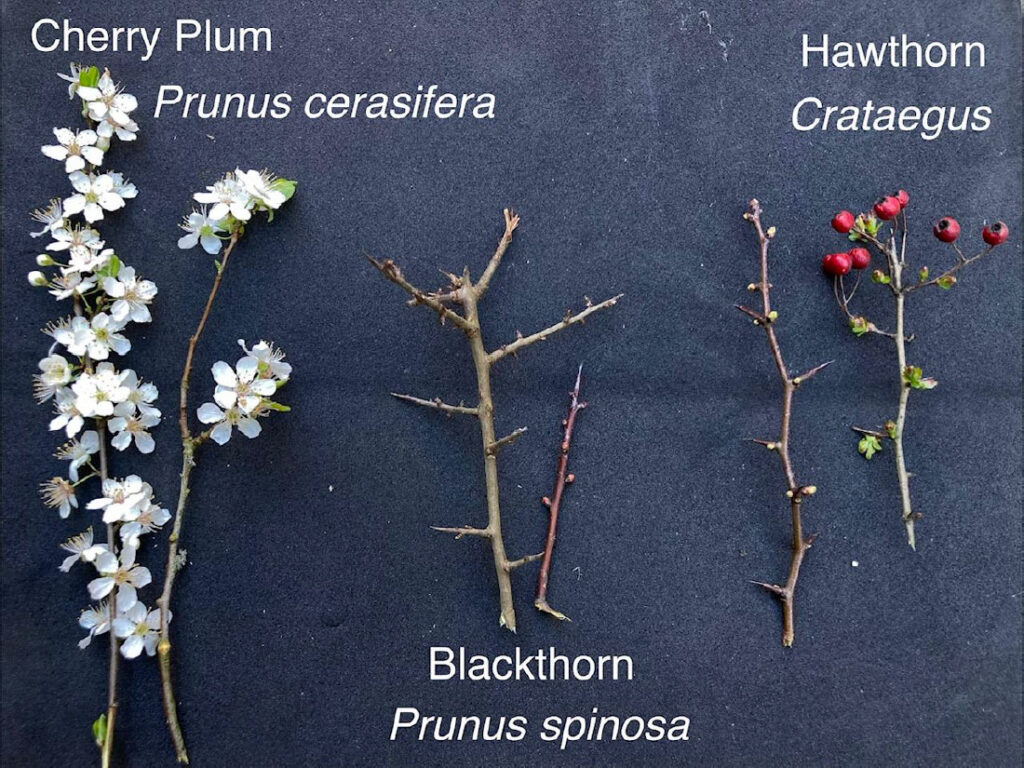
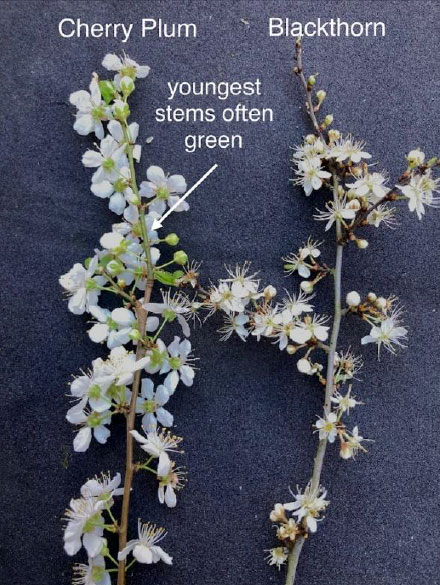
From February onwards there is a succession of white-flowering hedges and trees in Warwickshire. The key species are Cherry Plum (Prunus cerasifera), Blackthorn (Prunus spinosa) and Hawthorn (Crataegus monogyna). Cherry plum tends to grow without thorns, have hairless twigs, flower earliest and at the same time as the foliage emerges, whilst Blackthorn flowers appear a bit later, and before the foliage. Hawthorn flowers last, and after the foliage has appeared.
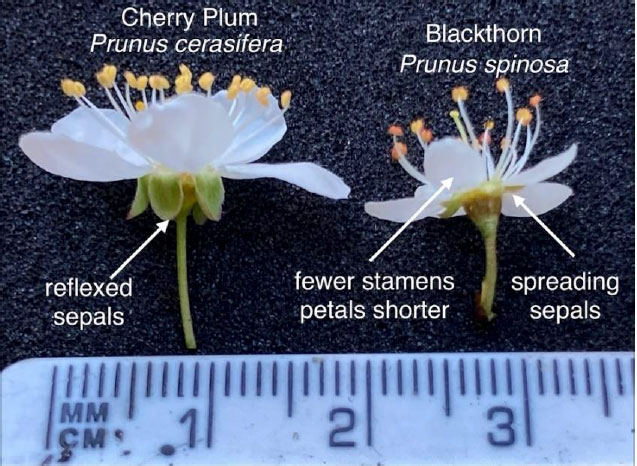
When the photographs below were taken (11th March 2026), almost all of the white hedgerow blossom was Cherry Plum (Prunus cerasifera). Virtually no Blackthorn (Prunus spinosa) had started to flower. The two species are very similar, but a few key features distinguish them, and these are illustrated below.
All three species are important components of the ‘blossom sequence’, described by Warwickshire’s Steven Falk and others. According to Steven, although a simple blossom sequence might just entail Blackthorn and Hawthorn, if further blossoming species are added to a hedge network, this can provide a longer and more continuous source of pollen and nectar for a variety of insects, including honey bees. Additional species could include Cherry Plum, Goat Willow and Common Gorse (which peak before Blackthorn), Field Maple and Crab Apple (which peak between Blackthorn and Hawthorn), and Guelder Rose, Dogwood and Elder (which peak after Hawthorn).
It is important to manage hedges in a way that allows at least a proportion of them to flower each year. Cutting once every two, or preferably three, years increases flower and berry abundance, as flowers and berries are often only produced on two-year and older stems. There is plenty of guidance available on managing hedgerows for wildlife.
If you’re interested in the flowering times of key species such as Blackthorn, and the timing of other wildlife activities then you may wish to visit Nature’s Calendar.
Images and information provided by Di Napier.