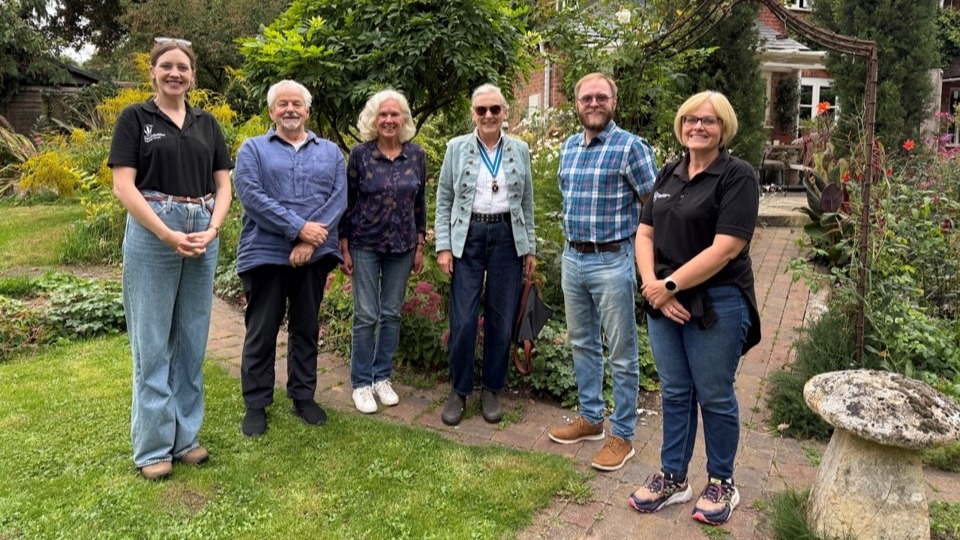
In a visit organised by the Warwickshire Wildlife Trust (WkWT), Warwickshire’s High Sheriff, Susan Rasmussen, visited Preston on Stour to hear more about the Preston on Stour Environmental Group (PEG) and Wild about Clifford (WAC). The event was held on Tuesday, the 22nd of September, in Lower Cottage Garden, hosted by Ron Hoe. The group included Susan Rasmussen, Amanda Evans and Grace Clarkson from WkWT, Nathan Johnstone from WAC and Margaret Brocklehurst and Ron Hoe from PEG. They sat and enjoyed tea and biscuits in the sunshine, chatting about the kinds of things our groups do. Susan was very interested in our activities, and she enjoyed the tour of Ron’s garden before she left.
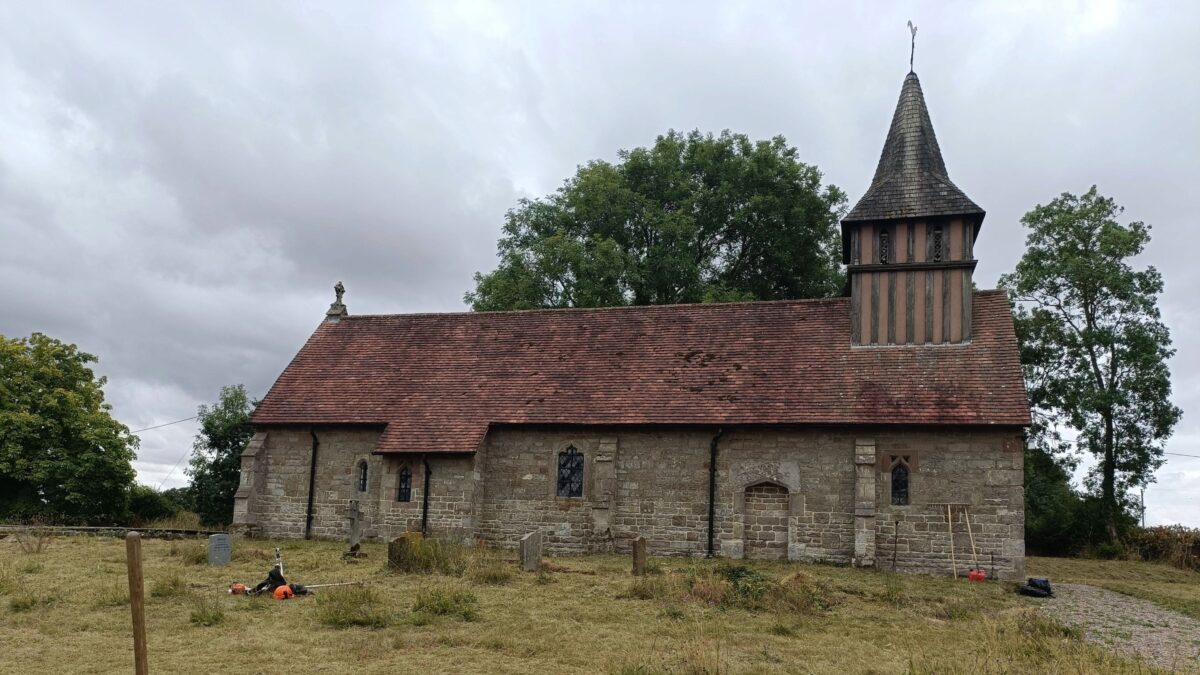
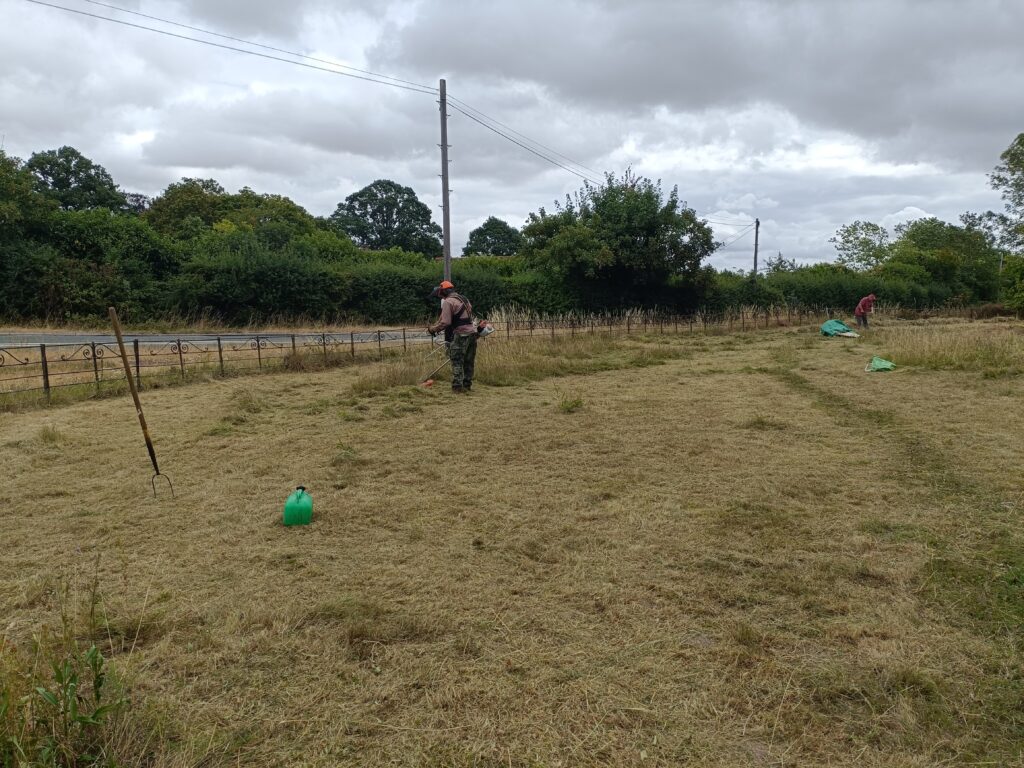
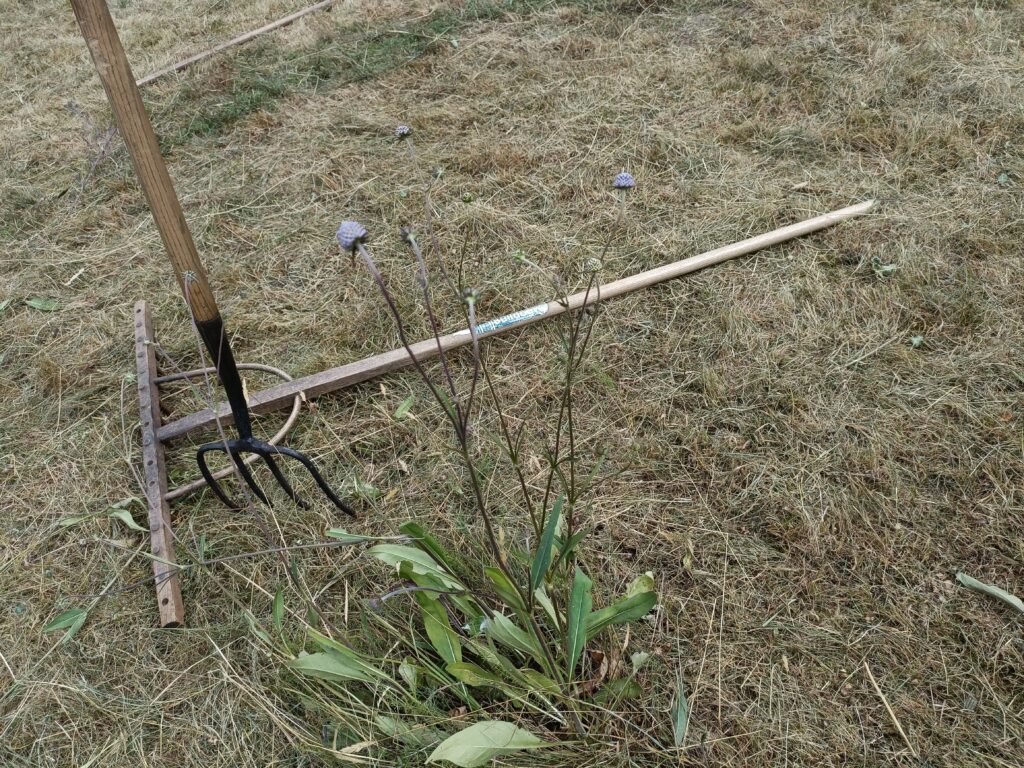
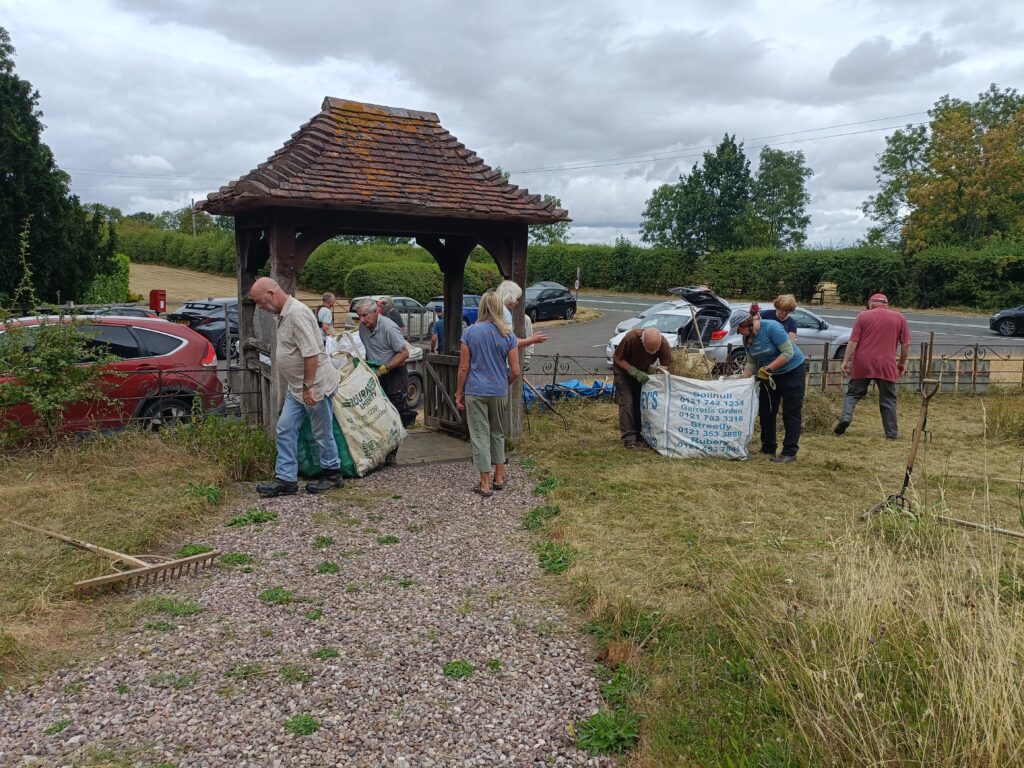
On 4 August, volunteers from Warwickshire Butterfly Conservation spent the morning harvesting the rich mix of grasses and wildflowers that flourish in the churchyard of St Mary’s.
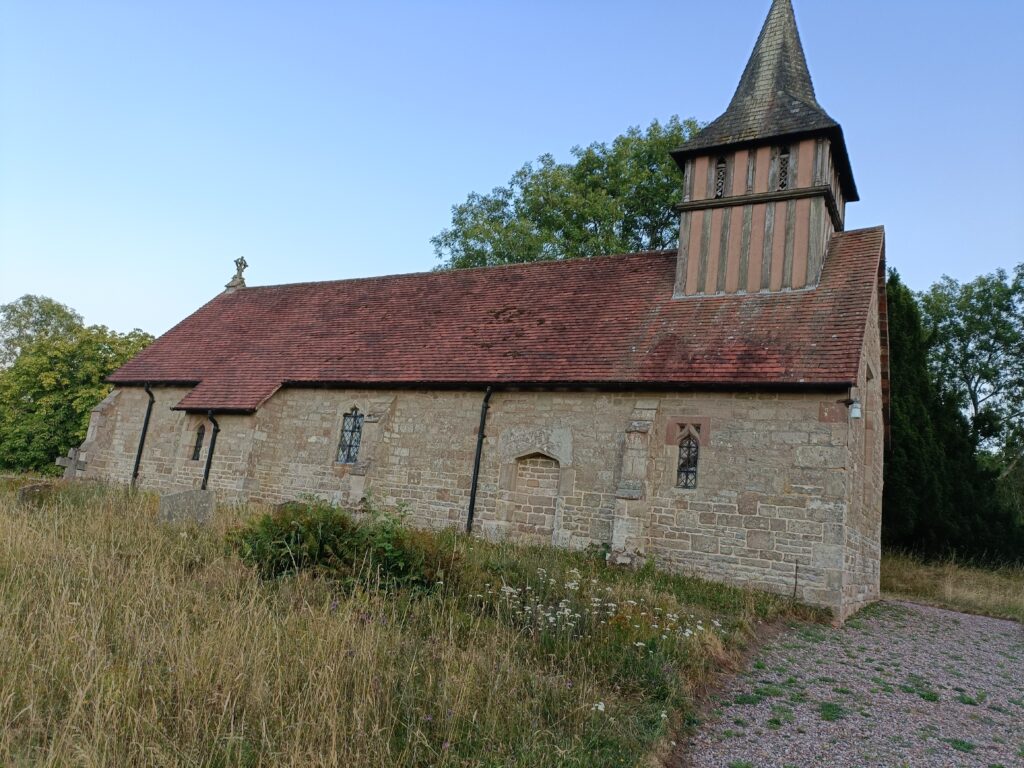
St Mary’s is home to an exceptional species-rich churchyard that has remained largely undisturbed for centuries. Native wildflowers have continued to thrive here, flowering and setting seed year after year. In spring, the churchyard is carpeted with cowslips, while summer brings a vibrant display of knapweed, scabious, betony, quaking grass and many other wildflower species. In recognition of its ecological importance, the churchyard was designated a Local Wildlife Site in 2003.
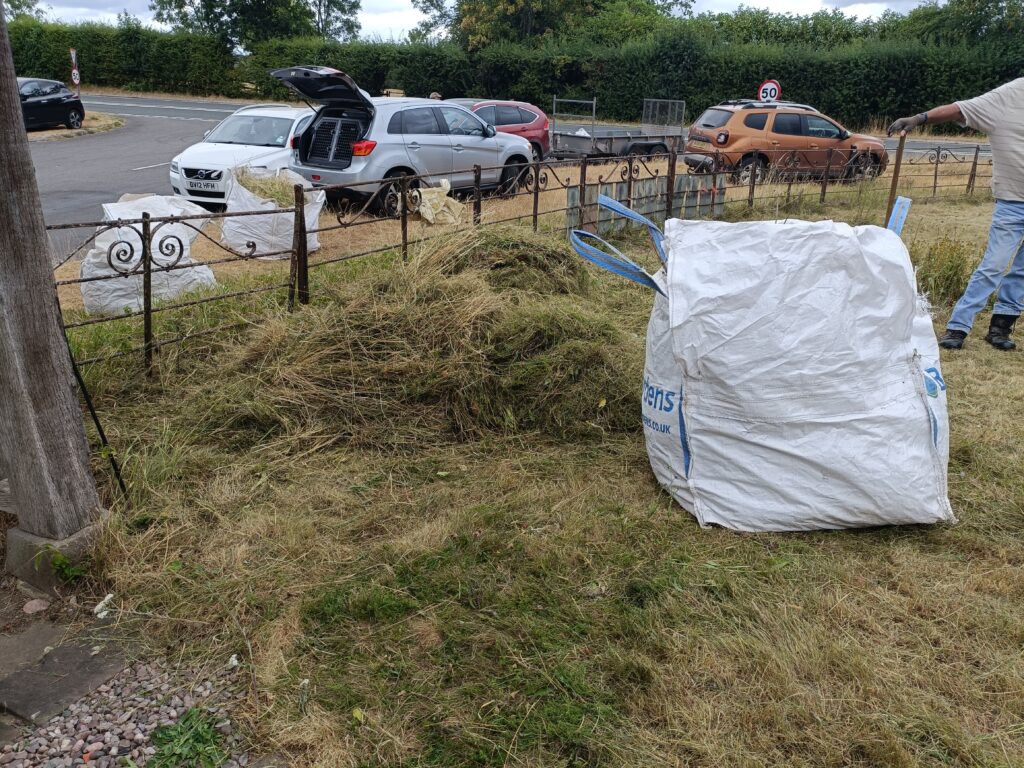
After cutting, the freshly harvested “green hay” was carefully raked into piles. Some was spread within St Mary’s churchyard, while the remainder was packed into builders’ bags and transported to several other churchyards across Warwickshire.
Timing is crucial when using green hay for habitat restoration. To maximise the transfer of viable seeds, the hay must be spread on recipient sites within a few hours of being cut. As a result, the bags were quickly collected and delivered to their new locations.
The transfer of high-quality green hay is one of the most effective ways to increase wildflower diversity. It also ensures that the seeds are of local provenance, making them well suited to Warwickshire’s landscapes and growing conditions.
This simple but valuable conservation practice helps preserve and enhance the county’s rich natural heritage for future generations.