
Ghostly hedgerows

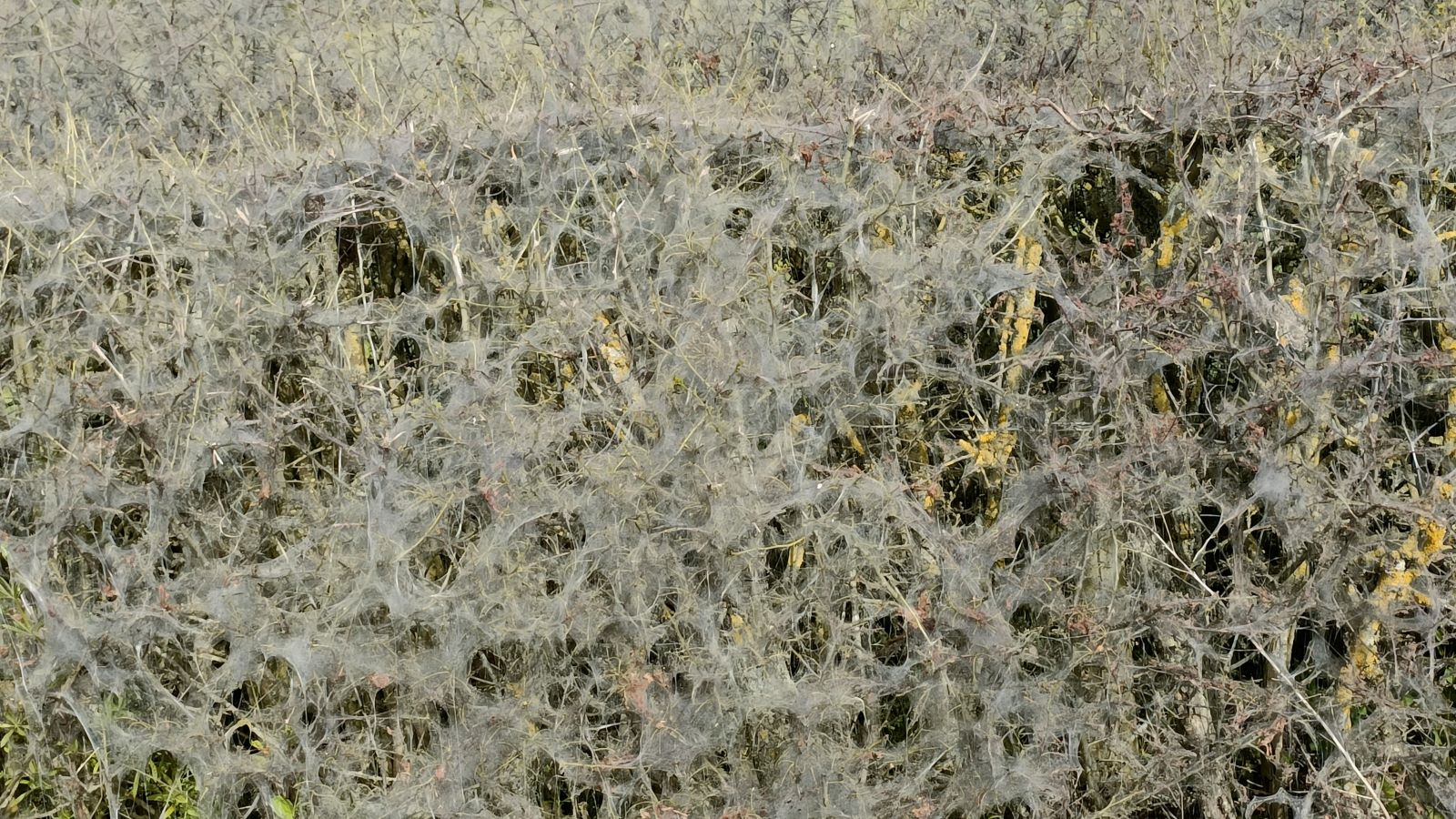
Ghostly Hedgerows in Warwickshire: What’s Behind the Webs?
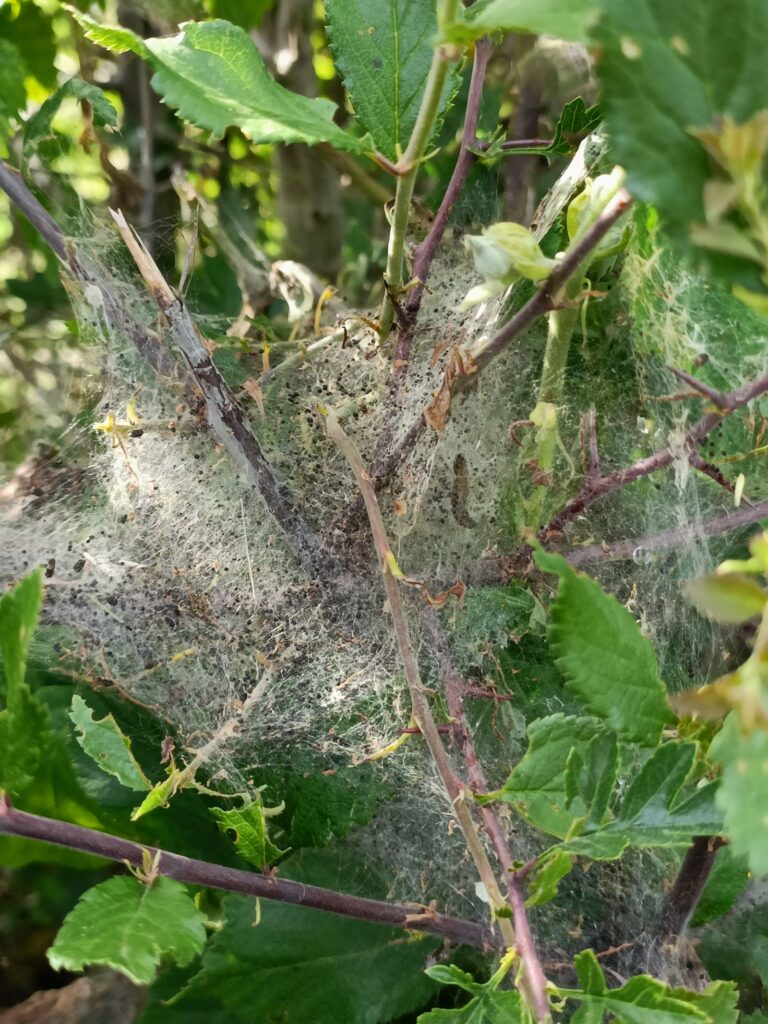
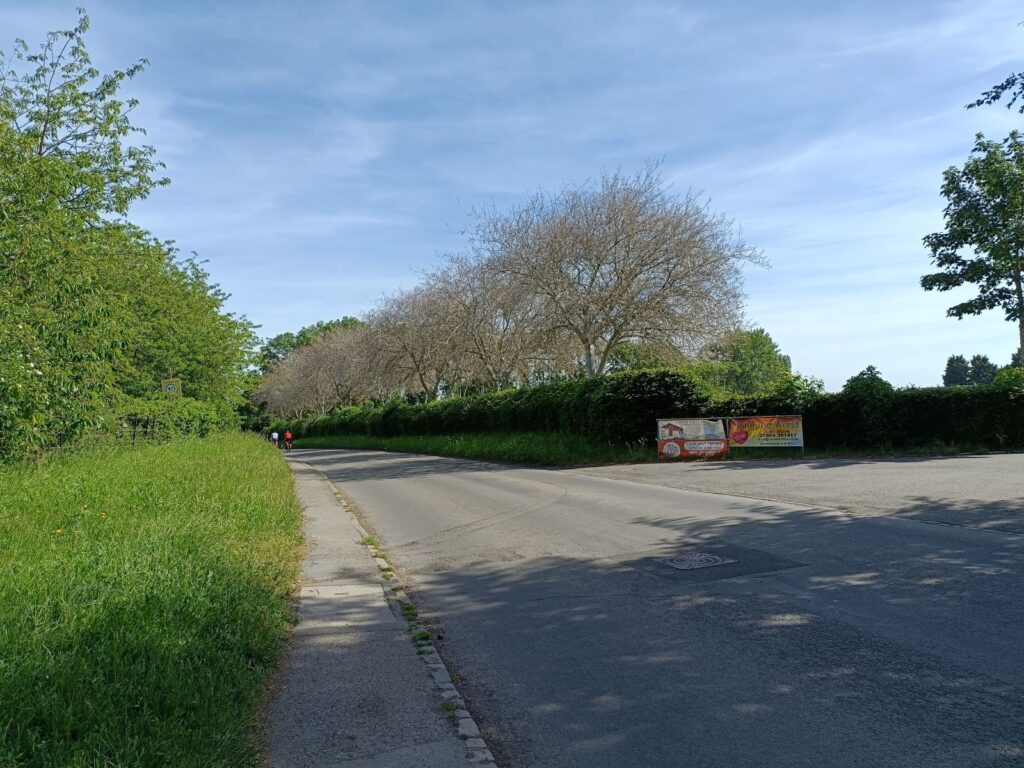
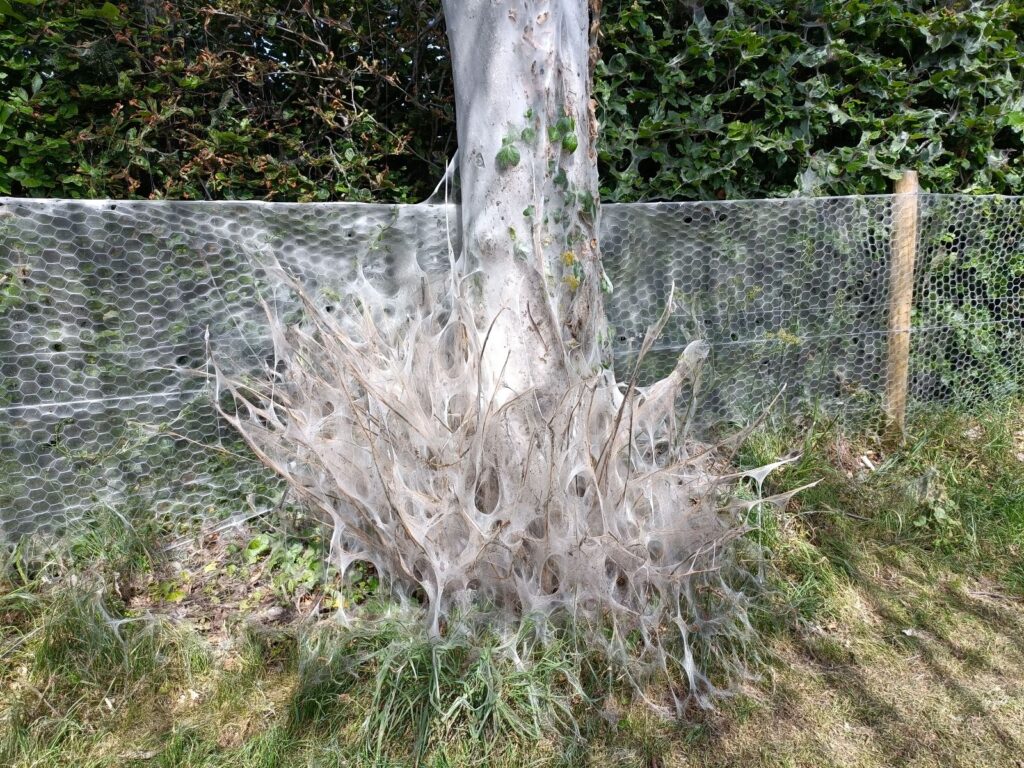
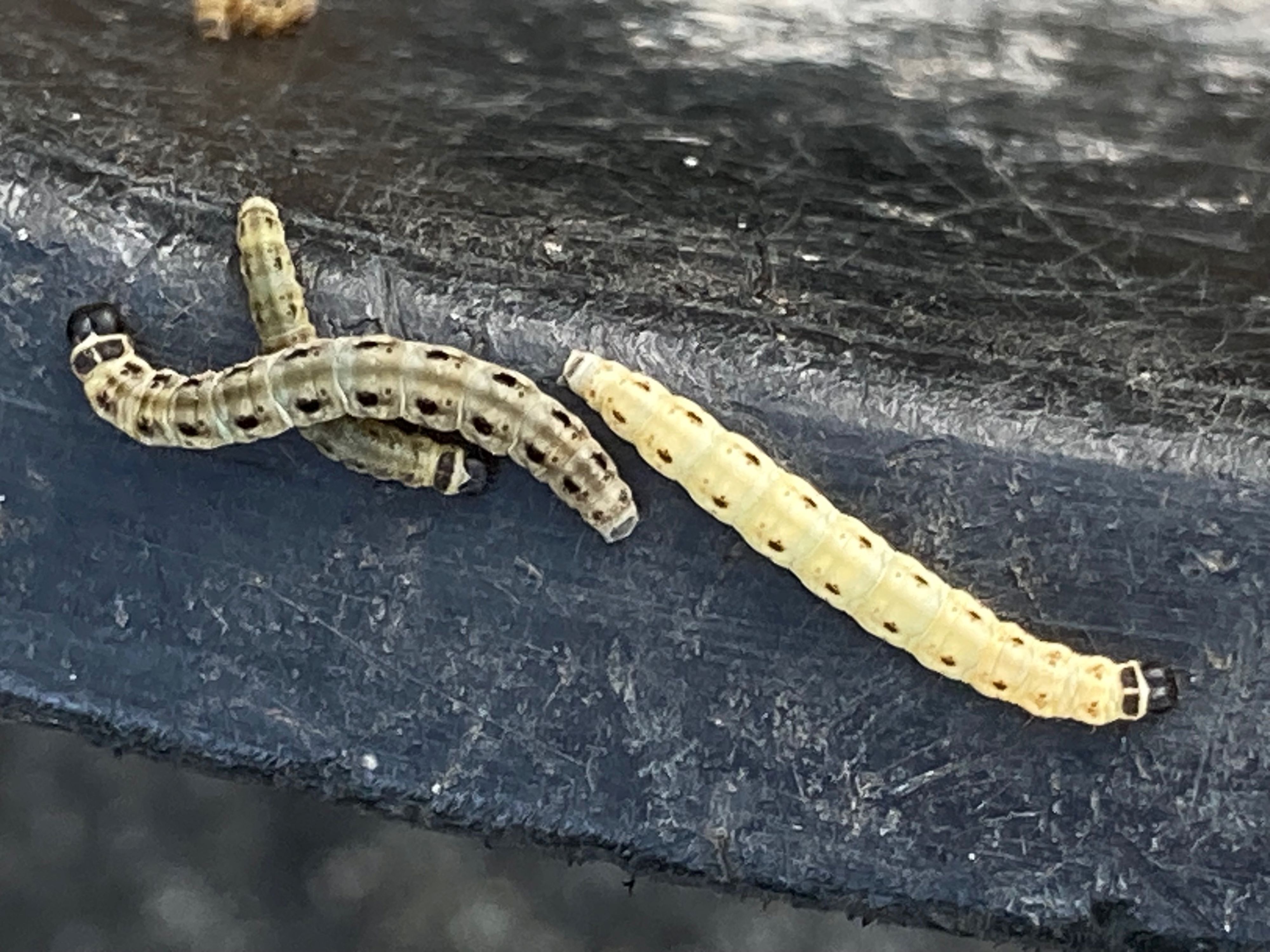
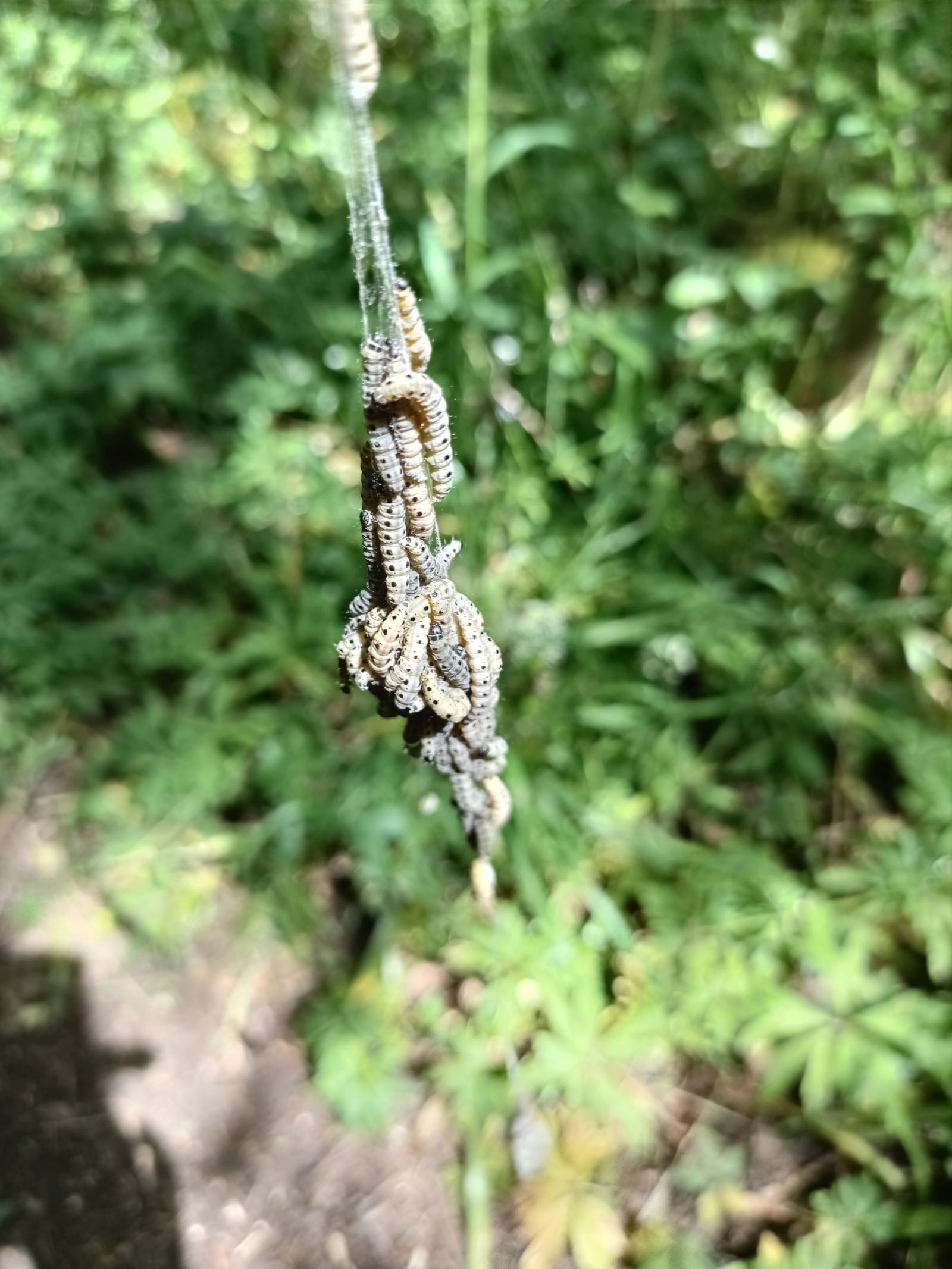
Some hedgerows and trees across Warwickshire have recently taken on a striking, almost ghost‑like appearance. Look closely and you’ll notice they’re wrapped in sheets of silken webbing, often filled with clusters of small caterpillars. These are the larvae of several species of ermine moth.
Which Species Create These Webs?
There are eight ermine moth species in the UK, but only a few produce the dramatic, communal webs now appearing in the countryside:
- Orchard Ermine — typically found on blackthorn and hawthorn
- Spindle Ermine — found on spindle
- Bird‑cherry Ermine — found on bird‑cherry
There is also an ermine moth whose caterpillars feed on apple.
These species can create extensive, ghostly sheets of silk that cover entire branches or even whole shrubs.
Why Do They Spin Such Large Webs?
By living together in large groups, the caterpillars gain protection through numbers. The dense webbing adds another layer of defence, making it harder for predators to reach them.
Are the Webs Harmful?
Not at all. The webs and caterpillars are harmless and usually appear from May to June. As summer progresses, the silk naturally breaks down and the affected shrubs or trees typically recover fully.
Wildlife also benefits — birds such as blue tits feed on the caterpillars, playing their part in the ecosystem.
What Happens Next?
Later in the summer, the caterpillars pupate and emerge as adult ermine moths. These moths are small, white or greyish, and marked with many tiny black dots — the pattern that gives them their “ermine” name.