Initiatives
Saving our Swifts
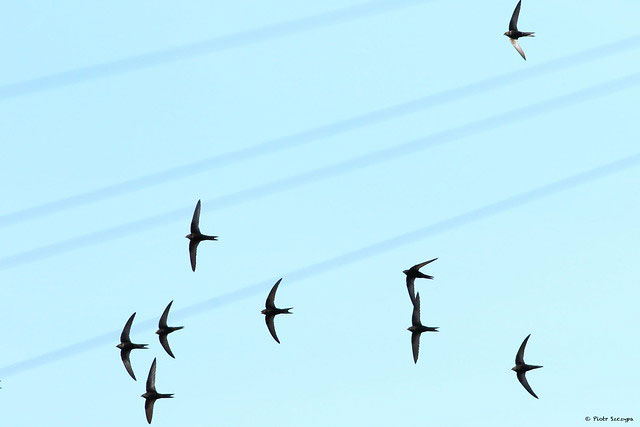
The Swift (Apus apus) is the long-distance migrant most associated with people, as it nests among urban dwellings. In early May, Swifts return to Britain and Ireland and are celebrated as harbingers of summer. Their dark, scythe-winged silhouettes wheeling through blue skies, accompanied by screaming calls, have long featured in poetry and prose. Although widespread across much of Britain and Ireland, Breeding Bird Survey data document a significant population decline, likely due to poor summer weather, reduced insect prey, and the continued loss of nesting sites.
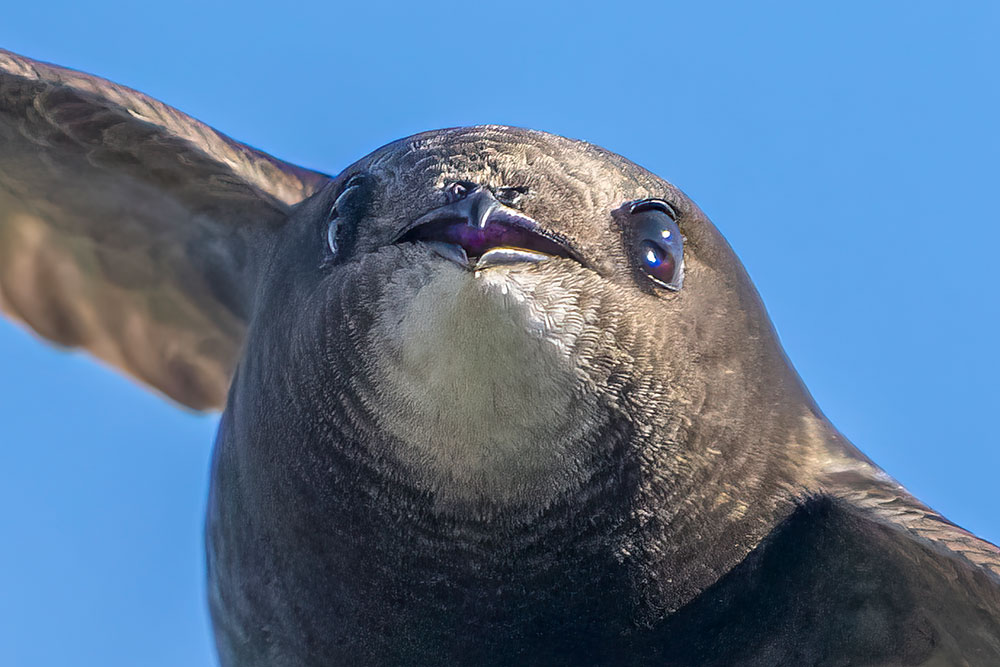
A medium-sized aerial bird and superb flyer, the Swift sleeps, eats, and mates on the wing, rarely touching the ground. It is the fastest bird in level flight, reaching speeds of up to 69 mph. Sooty brown with a white throat, it often appears black against the sky, with curved wings and a forked tail. A summer visitor breeding across the UK—most numerous in the south and east—Swifts winter in Africa, migrating 3,400 miles twice a year and stopping to refuel in countries such as Portugal and France.
Swift numbers are now plummeting, and the species is on the UK’s Red List of Birds of Conservation Concern. For every ten Swifts recorded in 1995, only about three remained by 2022.
The RSPB Swift Bird Facts | Apus Apus are taking action to help Swifts. They need our help to look out for nesting or screaming Swifts so they can identify nest sites that need protection Swift Conservation: Take Part in Swift Mapper. You can zoom in on the interactive map to see where swifts have been seen in our area and also to add information about your own sightings.
Several communities in the area are undertaking projects to support swifts.
Projects
Harbury Swift Village Project
Harbury Swift Village Project was initiated in 2022 to help the long-term recovery of the swift population in Harbury.
Swifts are very faithful to their nest sites, returning to the same place year after year, to nest alongside other swifts, in colonies. One of the causes of their decline in number is the loss of their traditional nest sites, due to renovation or demolition of older buildings, while new buildings typically do not provide nesting opportunities for swifts. For decades, every year swifts have faithfully returned to nest under the eaves of many properties in Harbury; with several pairs nesting at the Old New Inn and in buildings on Bush Heath Lane and Mill Street, among other places. Renovation work at the Old New Inn (and subsequent loss of the swift colony there) was the inspiration for this project to make Harbury one of a growing number Swift Villages in the UK. A Swift Village is a community made up of several groups of neighbouring houses, all with swift boxes, with the shared goal of supporting swift colonies.
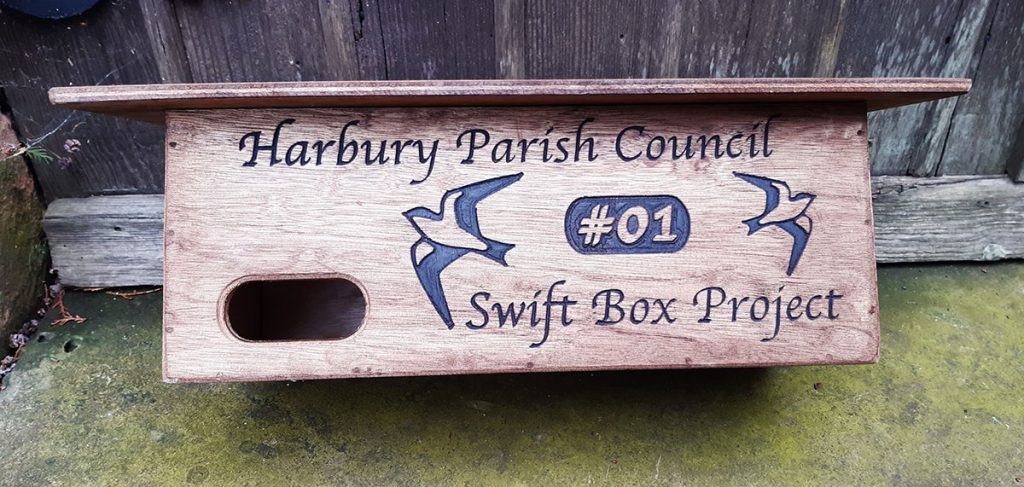
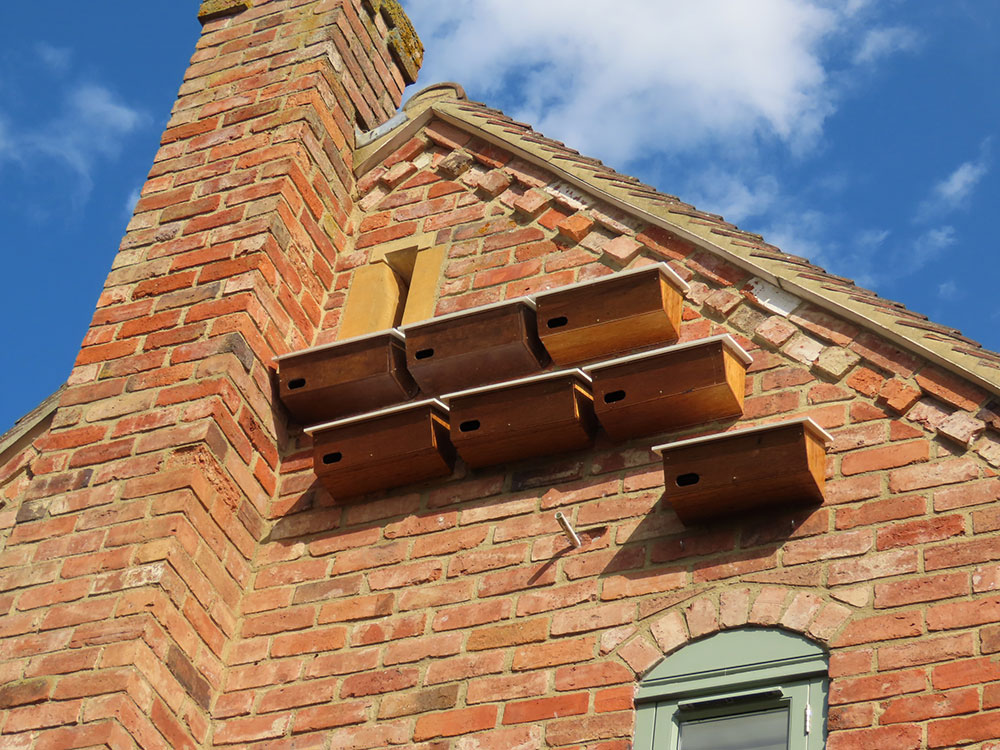
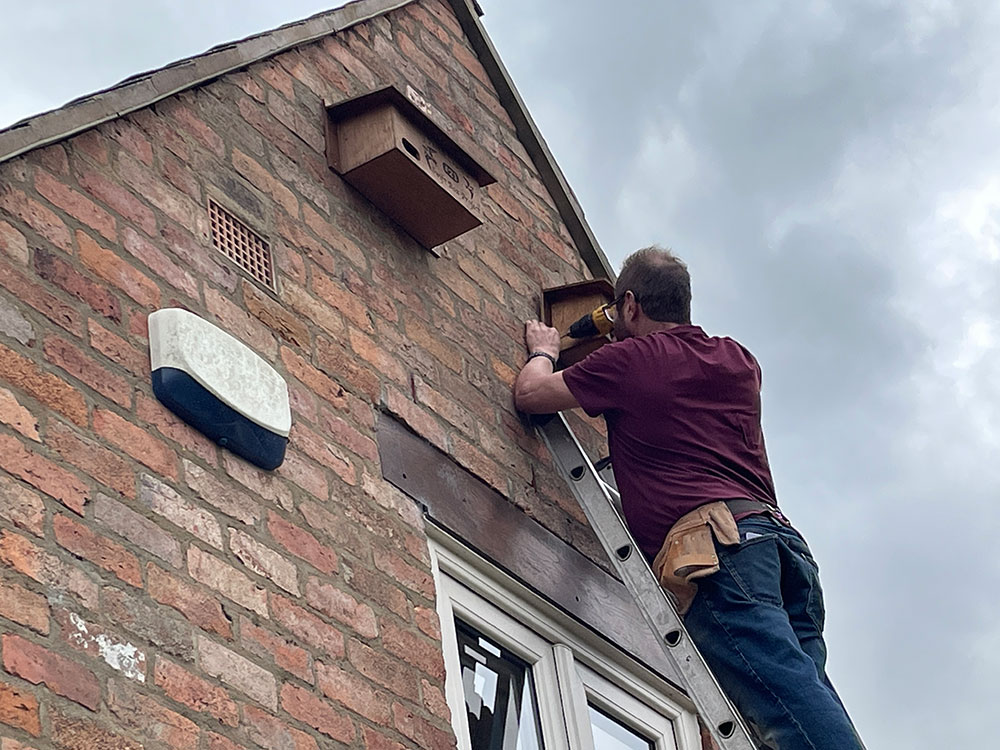
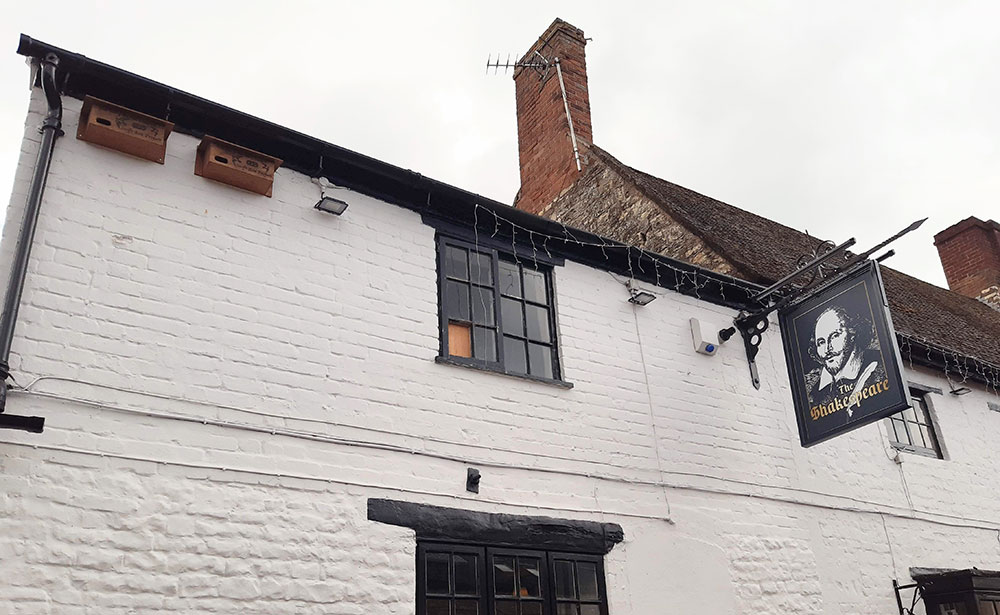
In 2022, Harbury Parish Council enthusiastically agreed to give practical aid for swift conservation through generous funding to provide and install nest boxes throughout the village. Initially, the Parish Council Clerk contacted the Bishop’s Itchington Men’s Shed, and in September, with a donation from the Parish Council, the members of this organisation presented Harbury with ten swift nest boxes. Swifts are gregarious and live in colonies rather than as individual pairs, so it was important to provide groups of boxes, either on a single property, or on several adjacent properties. Harbury Parish Council agreed to fund a further 30 boxes, to be made and inscribed by local carpenter Craig Knowles, of Phoenix Craft Creations.
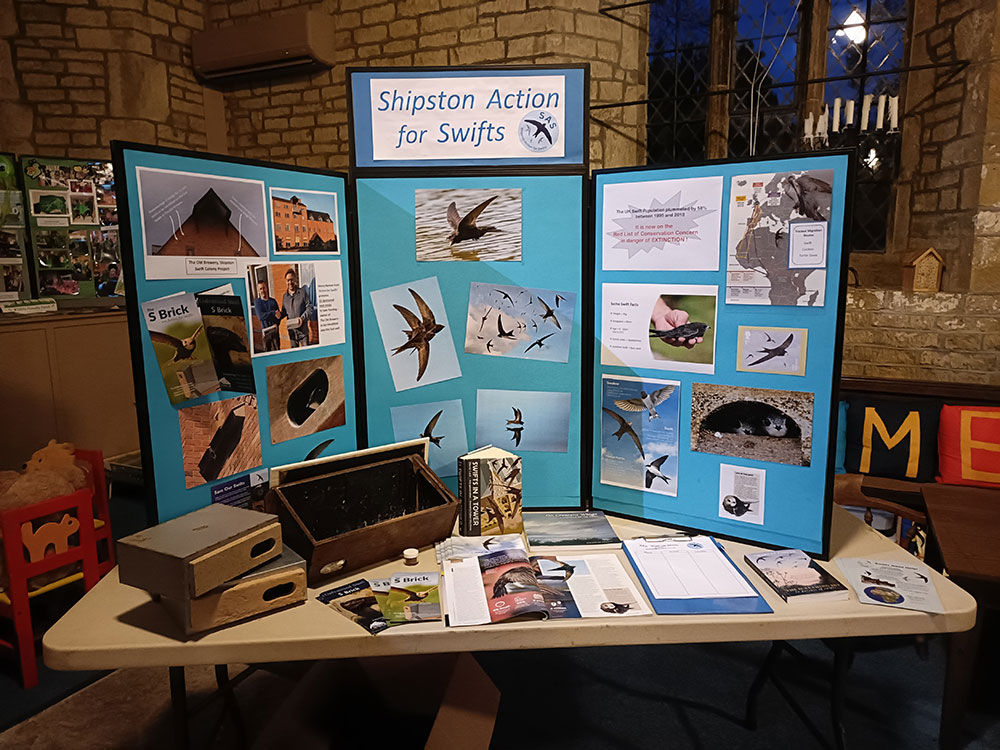
Shipston Action for Swifts
Swifts arrive in the area in early May, always returning to the same nesting site. They set off again on a long migration south, followed a little later by their fledglings, who have to find their own way!
Sadly, these remarkable birds are under threat – from 1995 to 2018 their population declined by 58% and they are now in danger of extinction. One reason is swifts love to nest in old buildings, finding safe places high up in cracks in roofs and walls. Such places are increasingly rare in modern buildings.
Another problem is swifts feed on air-born insects – themselves under threat due to the use of pesticides, pollution of air and water and of course climate change.
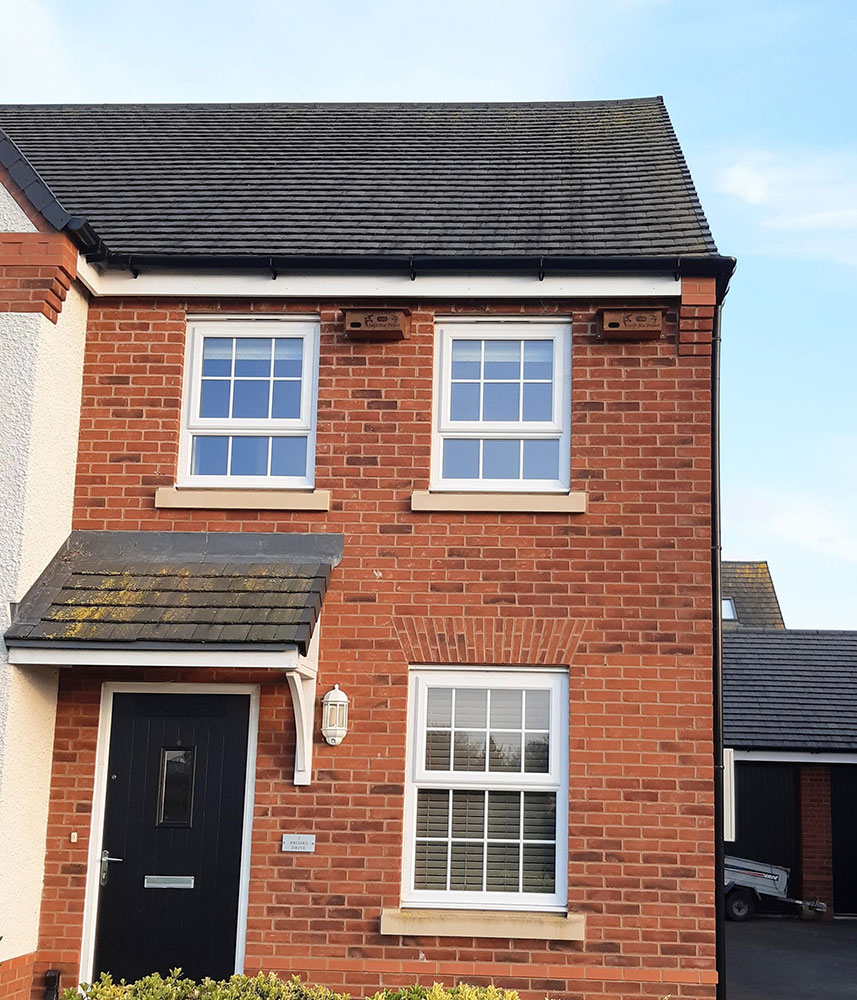
Shipston had a good-sized population of swifts in 2013, but by 2016 they were greatly reduced and by 2019 there were probably only about nine or ten pairs left. In 2018 SAFE member Jacey Jackson and her husband Ed put up three nest boxes on the outside of their home in Shipston; Subsequently four more boxes were added to expand the colony which has continued to flourish.
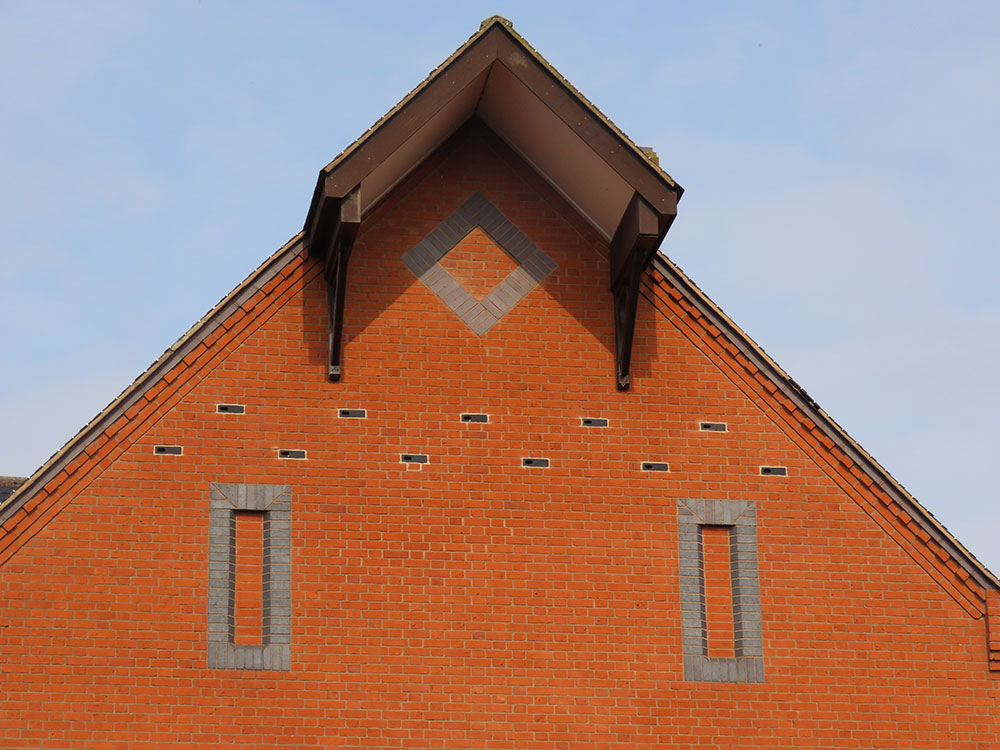
Swift bricks can be seen inserted into a wall of the Shipston Tesco building; eleven have been fitted high up on the east-facing wall of Shipston’s Old Brewery building on the Stratford Road. Currently we are hoping to fit swift bricks into one of the walls of Shipston Town Council offices on West Street.
During summer our swift expert, Jacey, conducts walks around our area for those interested in these remarkable birds, as well as giving occasional talks.
How you can help
- Check the Action for Swifts website to see if there is already a group near where you live. If not, then you can help your swifts locally by forming your own swift group.
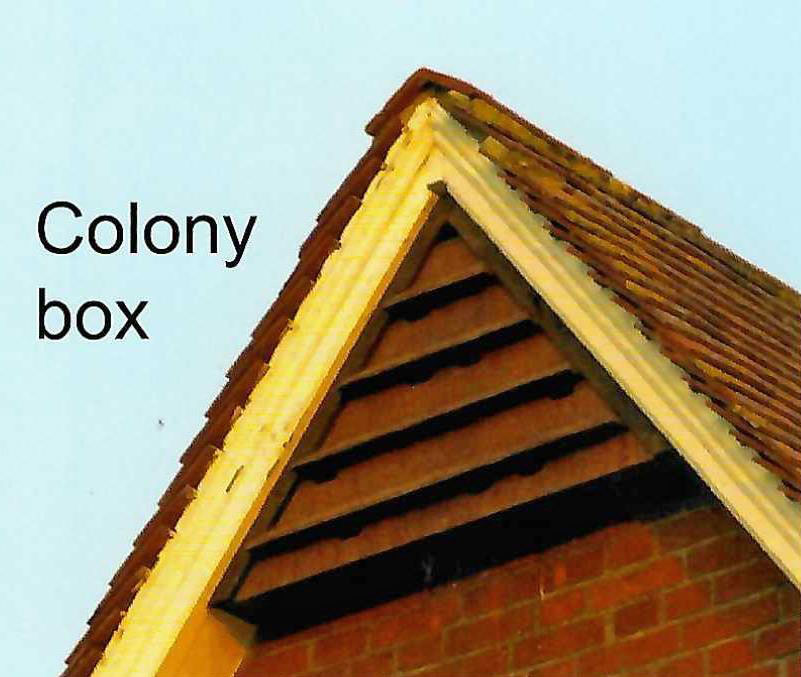
- You can help swell your local swift colonies by putting up swift nest boxes, or by installing soffit boxes or swift bricks. There are many different types of swift nest boxes available, but the most important thing to remember is that a pair of swifts will use the same box for their entire breeding lives, so the box needs to be made from durable materials.
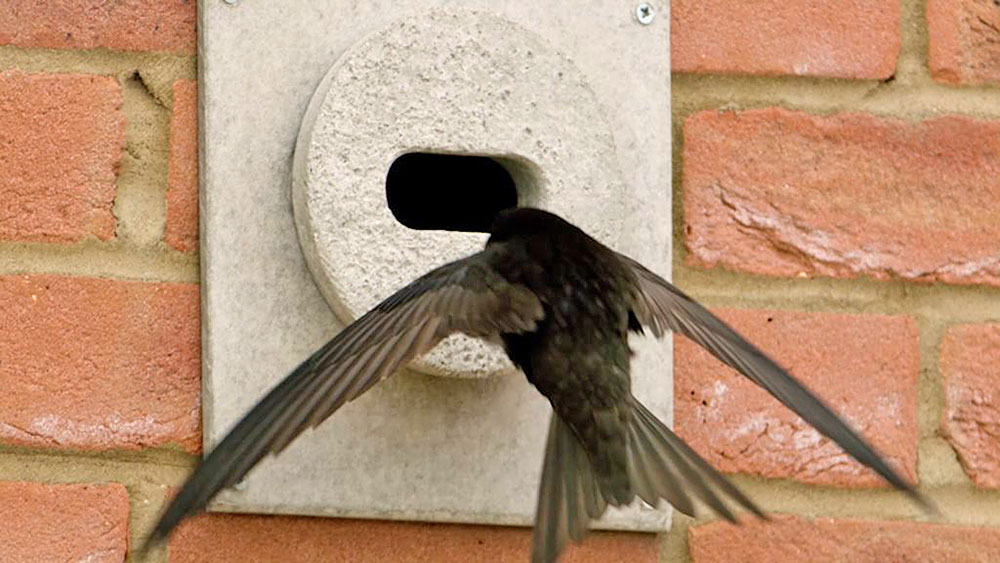
- If you are replacing your soffits, consider including some soffit swift boxes (see information on the Action for Swifts website). These are an ideal solution for swifts and very discreet. Swifts will readily nest in soffit boxes as it’s their natural instinct to fly up into the entrance hole at that angle.
- Swift bricks are an even better option for swifts as the birds can live up to 20 years and are faithful to the same nest site. Swift bricks will last longer than wooden boxes, and can be retro-fitted. They are also more natural for swifts as they mimic the type of hole that swifts would have used in the past.
- A swift nest itself is very modest, just a few feathers, and the birds don’t cause any damage to property and leave minimal mess. Nest boxes should included a nest cup to keep the eggs contained and stop them falling out of the nest.
- You can also garden for swifts: swifts only eat insects and need plenty of insect food to raise their chicks and to help them fatten up before they migrate back to Africa later in the summer. Grow insect attracting plants and install a pond. Swifts love to eat mosquitoes!
Resources & Guides for Swifts








| Title | Categories | Link |
|---|
Upcoming Events